
Meta Description: Experience spine-chilling Appalachian folk horror as hiker Silas discovers a hidden mountain town that worships an ancient bog body to keep deadly fog at bay in the Blue Ridge Mountains.
The Appalachian folk horror tradition runs as deep as the mountain roots themselves, where ancient Cherokee trails wind through forests that have witnessed centuries of unexplained phenomena. Silas Merrick had heard the stories growing up in Virginia: tales of mysterious disappearances, strange lights, and communities that existed outside the boundaries of modern maps. But he never believed them until the fog swallowed him whole on that October afternoon in the Blue Ridge Mountains.
When the Blue Ridge Mountains Call
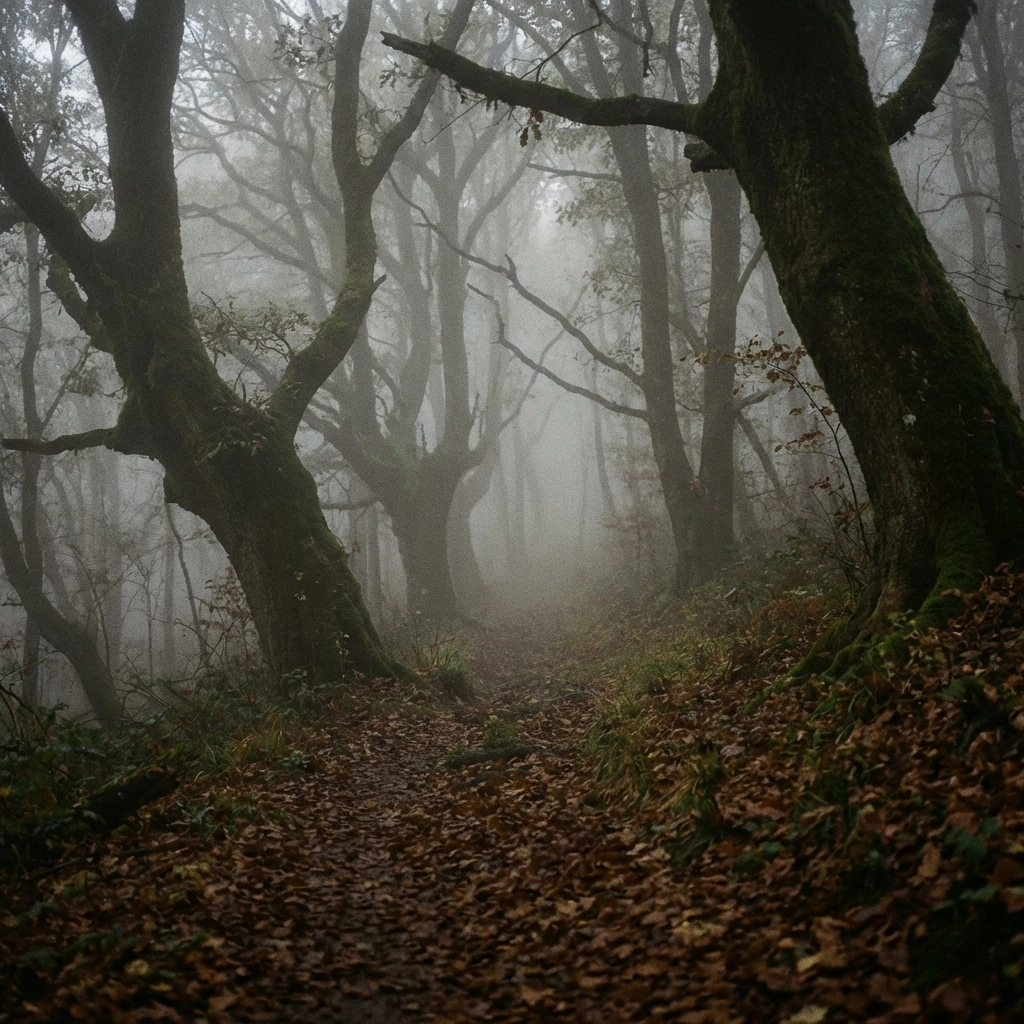
Silas had been hiking the Appalachian Trail for three days when the weather turned. What started as a crisp autumn morning transformed into something far more sinister as clouds rolled across the ridgeline like fingers of some ancient hand. The Appalachian folk horror stories his grandmother used to whisper suddenly felt less like childhood entertainment and more like warnings he should have heeded.
The fog descended with unnatural speed, thick as cotton and twice as suffocating. Within minutes, Silas couldn’t see more than two feet ahead. The familiar trail markers vanished into the gray void, and the comforting sounds of the forest: birdsong, rustling leaves, distant water: died away until only his labored breathing filled the silence.
Cherokee folklore spoke of such fogs, his grandmother had said. Spirits of the mountain that could lead travelers astray, sometimes for hours, sometimes forever. In true Appalachian folk horror fashion, the boundary between the natural and supernatural blurred until distinction became impossible.
The Town That Shouldn’t Exist
Hours passed, or perhaps days: time lost all meaning in the suffocating gray. Silas stumbled forward, following what felt like a path, his water nearly gone and his flashlight dimming. When the fog finally began to thin, he found himself staring at something impossible: a small mountain town nestled in a valley that appeared on no map he’d ever seen.
Weathered wooden buildings lined a single dirt road, their windows glowing with warm yellow light. Smoke rose from chimneys in perfectly straight lines, undisturbed by any breeze. The fog hung around the town’s perimeter like a protective wall, but inside the settlement, the air was clear and still.
As Silas approached, he noticed the townspeople. Roughly two dozen souls, all pale and gaunt, wearing clothing that seemed decades out of fashion. They watched him with expressions of curiosity mixed with something else: pity, perhaps, or recognition.
“Lost in the fog, were you?” asked an elderly woman with silver hair braided down to her waist. Her accent carried the thick mountain drawl that embodied authentic Appalachian folk horror narratives. “Happens to most who find their way to Grayhollow. Come, you’ll want to see the Keeper before nightfall.”
Ancient Folklore and the Bog Body Keeper
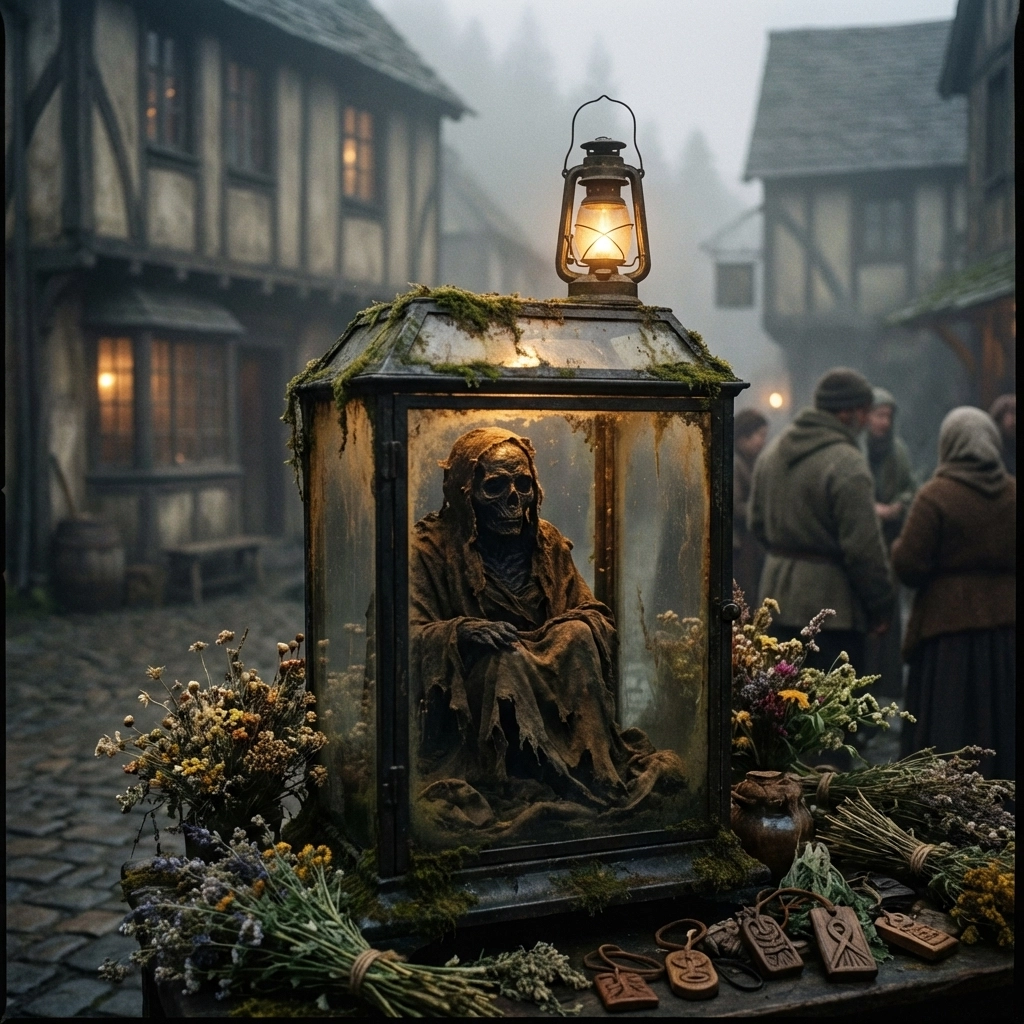
The townspeople led Silas through the settlement’s center, where he noticed something deeply unsettling. In the middle of the town square stood a glass case, and inside lay a perfectly preserved human body. The figure was small, wizened, with leathery brown skin and hair still intact despite obvious great age. Flowers and small offerings surrounded the case: the unmistakable signs of worship.
“That’s the Keeper,” explained a man named Ezra, whose hollow cheeks and sunken eyes gave him the appearance of someone who hadn’t seen sunlight in months. “Pulled him from the bog up on Raven’s Peak about sixty years back. Long as he stays here, the fog stays out there.”
The ancient folklore of bog bodies wasn’t unique to Ireland and Northern Europe, Silas realized with growing unease. The Appalachian folk horror tradition had its own version, and he was staring at it. The preserved corpse seemed to watch him through closed eyelids, and he could swear he saw the chest rise and fall with impossible breath.
“What happens if he… leaves?” Silas asked, though he dreaded the answer.
“Fog comes in,” said the old woman matter-of-factly. “Comes in and takes what it wants. Used to happen regular-like before we found him. Town would lose somebody every full moon to that hungry gray. Children mostly, but sometimes adults too. They’d walk right into it, smiling like they’d found something wonderful.”
The Mountain Mystery Revealed
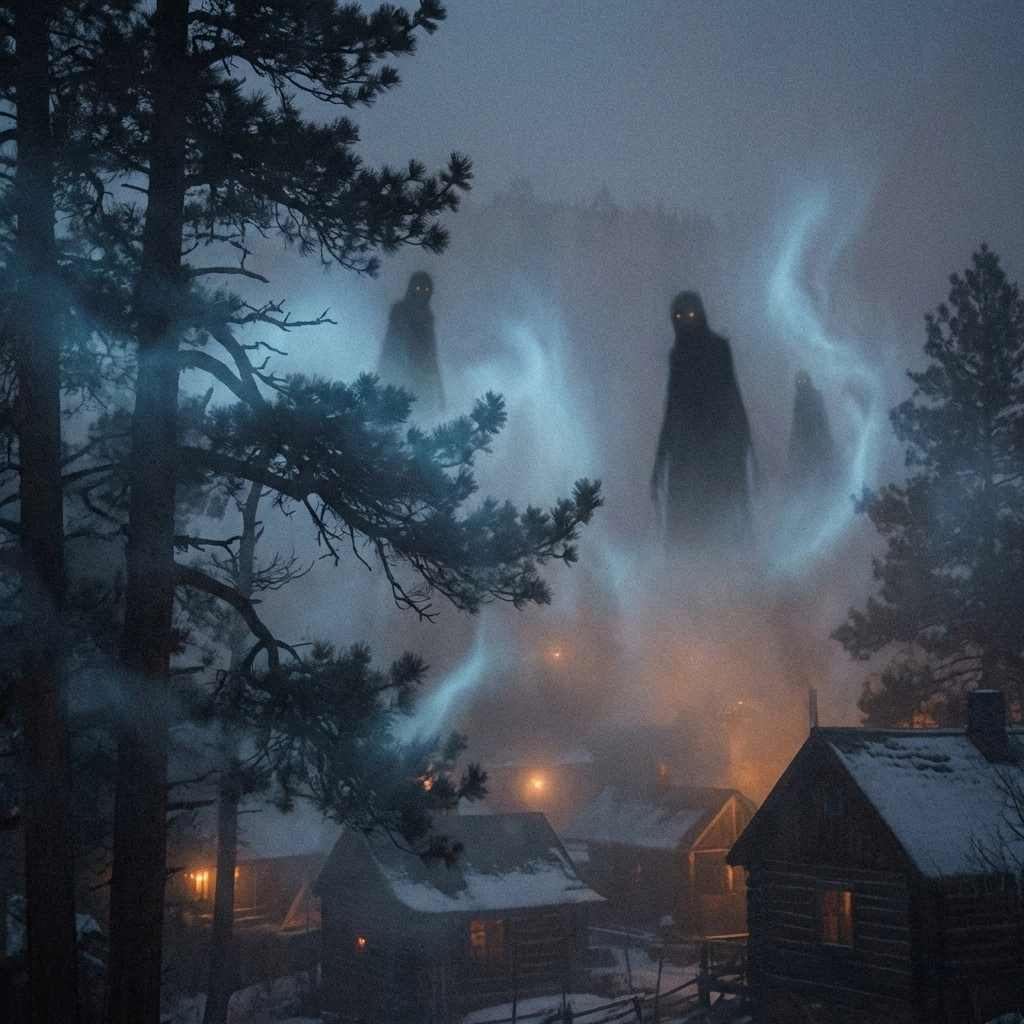
As darkness fell over Grayhollow, the true horror of the situation became clear. The fog pressed against the town’s borders like a living thing, probing and testing the invisible barrier that kept it at bay. Silas could see shapes moving within it: tall, impossibly thin figures that beckoned silently from the gray.
“The Keeper’s weakening,” Ezra whispered as they gathered around the glass case for the evening vigil. “Been protecting us for six decades, but bog bodies don’t last forever. We figure we got maybe another month before he gives out completely.”
The Appalachian folk horror tradition demanded balance, Silas realized. The mountain mystery had its own cruel logic. The fog was ancient, predating human settlement by millennia. It had fed on the Cherokee before them, and would feed on whoever came after. The bog body was merely a temporary solution, a bargain struck between the living and the hungry dead.
“What then?” Silas asked, though the sinking feeling in his stomach suggested he already knew.
“Then we find a replacement,” said the old woman, her eyes never leaving his face. “Someone young and strong, someone the fog would find… appetizing.”
When Appalachian Folk Horror Becomes Reality
The truth hit Silas like a physical blow. The fog hadn’t led him here by accident. The town didn’t survive through luck or the protection of an ancient bog body. They survived through sacrifice, through feeding the hungry gray whatever it demanded when its current meal grew too weak to sustain it.
“I won’t do it,” he said, backing away from the circle of townspeople. “I won’t be your next Keeper.”
Ezra’s laugh was hollow and bitter. “Ain’t about what you’ll do, son. Fog’s already marked you. Why do you think it let you find us? It’s been calling you for days, leading you right where it needs you to be.”
As if responding to his words, the fog pressed closer to the town’s borders. The shapes within grew more distinct: tall, emaciated figures with eyes like holes in the world. They were beautiful and terrible, and Silas felt their pull like a physical force drawing him forward.
The Appalachian folk horror stories always ended this way, he realized. The mountains claimed what they needed, and mortals could only hope to delay the inevitable. The Cherokee had known this truth, had built their own barriers and made their own bargains. Now it was his turn to choose: fight the call and watch the town be consumed, or walk willingly into the gray and become the next guardian of Grayhollow.
The Fog’s Eternal Hunger
The bog body in the glass case opened its eyes.
They were the same hollow, hungry eyes as the figures in the fog: ancient beyond measure, filled with a terrible understanding. The Keeper’s mouth opened in a soundless scream or perhaps a welcome, and Silas felt the last of his resistance crumble away.
The townspeople stepped back as he approached the case. Their faces showed relief mixed with genuine sorrow: they knew what this cost, but they also knew survival demanded terrible choices. This was Appalachian folk horror at its most authentic: the understanding that some evils were too old and too hungry to ever truly defeat, only redirect.
As Silas placed his hands on the glass, the fog began to recede from the town’s borders. The shapes within grew fainter, satisfied with the promise of their new keeper. He felt the mountain mystery settling into his bones, the ancient folklore becoming his inheritance.
The bog body’s eyes closed for the final time, and somewhere in the distance, thunder rolled across the Blue Ridge Mountains like applause.
In six decades, when Silas’s strength finally failed, another lost hiker would find their way to Grayhollow. The fog would see to that. It always did.
The Appalachian folk horror cycle would continue, as it had for centuries, as it would for centuries more. The mountains were patient, and their hunger was eternal.
