The neon sign outside Murphy’s Bar flickered like a dying heartbeat, casting intermittent shadows across Jack Stone’s weathered face. At forty-two, he looked older: the kind of aging that comes from carrying too many secrets and wearing too many masks. This gritty superhero short story begins not with a heroic call to action, but with the quiet desperation of a man trying to forget who he used to be.
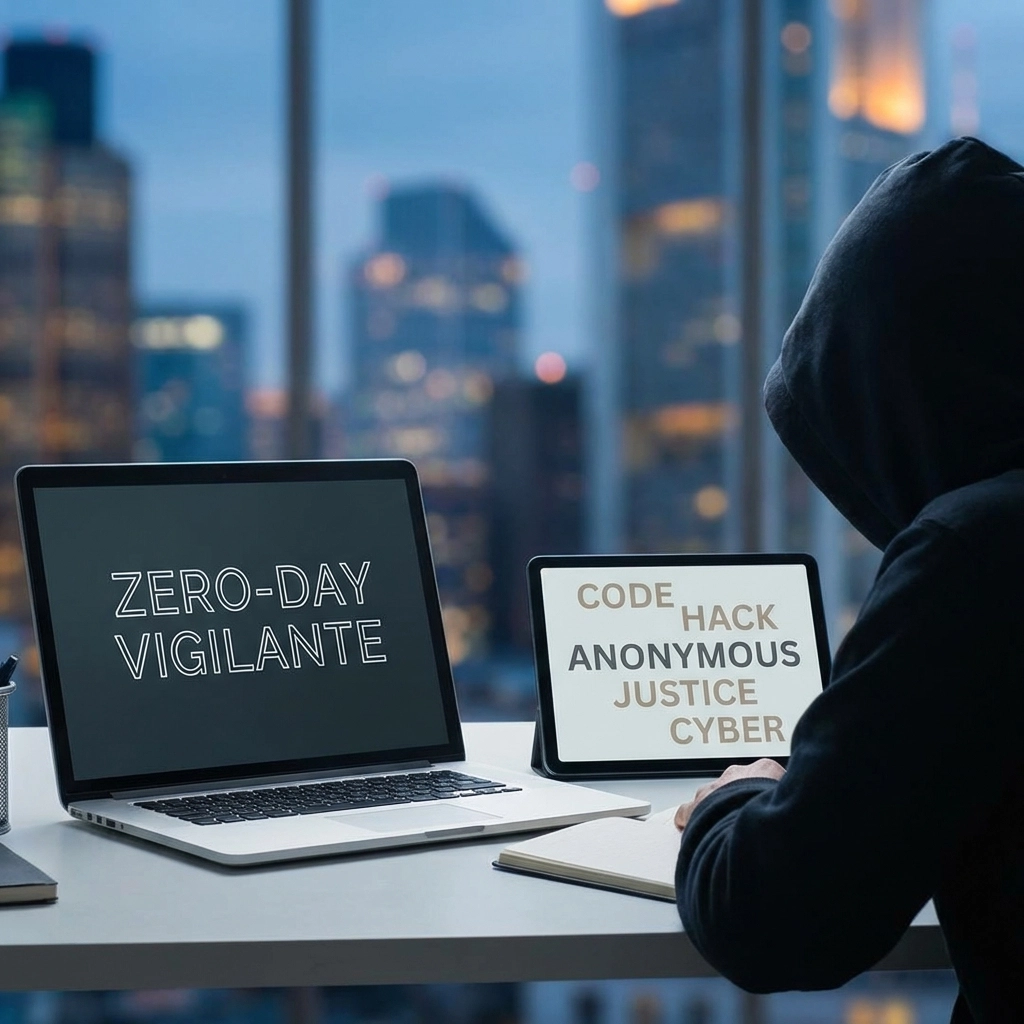
Jack adjusted his black security shirt and checked his watch. Another night as a bouncer in the Riverside District, another night pretending he was just another working-class guy keeping the peace. The irony wasn’t lost on him: he’d spent fifteen years as Zero-Day, the masked vigilante who’d cleaned up half the city’s corruption, only to end up checking IDs and breaking up bar fights for minimum wage plus tips.
The Weight of a Retired Superhero
The television above the bar droned on about rising crime rates and ineffective policing. Jack wiped down tables and tried not to listen, but the familiar ache in his chest returned: the one that reminded him there was a world out there that still needed saving, and he’d walked away from it.
“Stone!” Murphy called from behind the bar. “You see the notice they posted outside?”
Jack stepped out into the humid night air. Taped to the lamppost was a crisp white paper with corporate letterhead: Meridian Development Corporation – Notice of Eminent Domain Proceedings. The words blurred together, but the message was crystal clear. His neighborhood: the four-block radius of dive bars, corner stores, and rent-controlled apartments that had become his refuge: was marked for demolition.
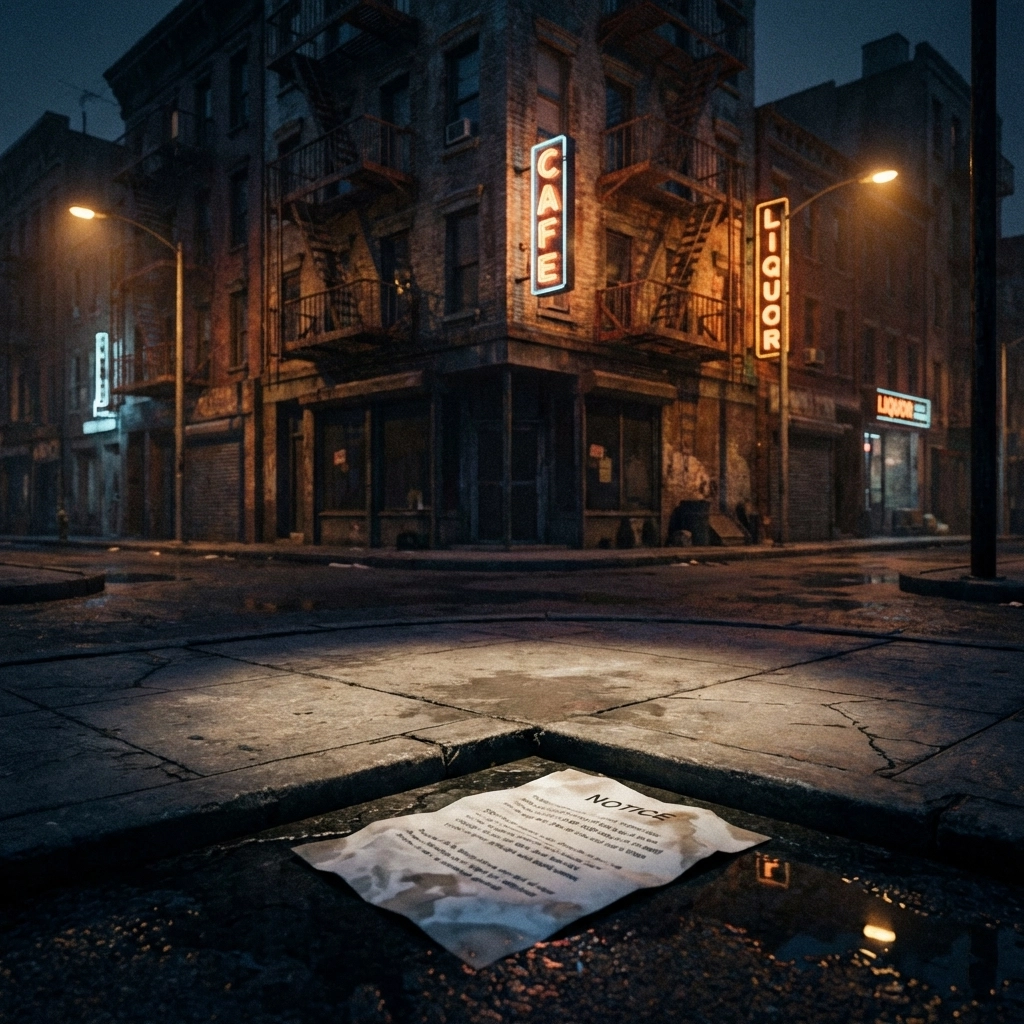
The notice gave residents thirty days to relocate. Meridian Development, backed by what the fine print revealed as “private security contractors,” would begin “area preparation” immediately following the deadline. Jack crumpled the paper, his enhanced strength tearing it to shreds before he caught himself. Old habits.
When Urban Vigilante Instincts Surface
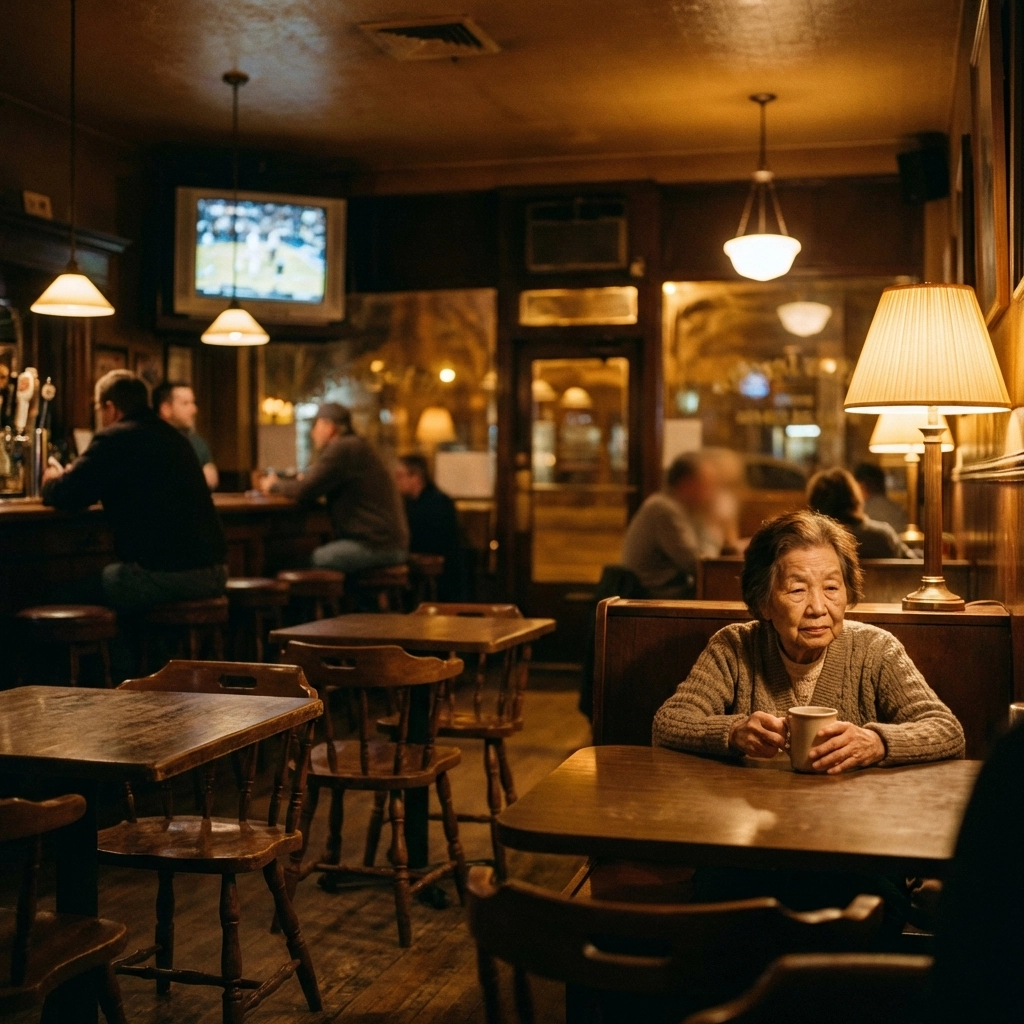
Inside Murphy’s, the regular crowd had gathered around the television. Mrs. Chen from the corner market sat in her usual booth, worry lines etched deep around her eyes. Tommy Rodriguez, the kid who swept floors at the auto shop, picked at his beer label with nervous energy. These weren’t the kind of people who had lawyers or political connections. They were the kind of people Zero-Day used to protect.
“They can’t just throw us out, can they?” Tommy asked no one in particular.
Murphy shrugged with the resignation of a man who’d seen gentrification destroy three other neighborhoods. “Money talks, kid. And we ain’t got any.”
Jack felt the familiar burn in his gut: the same feeling he used to get when he’d watch corrupt officials line their pockets while families suffered. He’d thought that anger had died along with his alter ego, but apparently, some fires never fully extinguish.
The next morning brought unwelcome visitors. Three black SUVs rolled down Riverside Avenue like mechanical vultures. Men in tactical gear began “surveying” the area, their body language screaming military contractor rather than construction crew. They carried clipboards and cameras, but their bulky vests suggested they were prepared for resistance.
Jack watched from his apartment window as one of the contractors approached Mrs. Chen’s market. The conversation was brief: too brief. When the man left, Mrs. Chen stood in her doorway, hands shaking as she locked up early for the first time in twenty years.
Neighborhood Defense: A Moral Ambiguity
That evening, Jack found Mrs. Chen sitting alone in Murphy’s, staring at a half-empty cup of coffee.
“They offered me five thousand dollars,” she said without looking up. “For a business my family’s run for thirty years. Five thousand.”
“What did you tell them?”
“That I needed time to think.” She laughed bitterly. “Time. As if there’s any other choice.”
Jack sat down across from her. “There might be.”
She looked at him then, really looked at him, as if seeing something she hadn’t noticed before. “You’re not just a bouncer, are you, Jack?”
He’d gotten too comfortable, let his guard down. In the old days, he’d never have let his civilian identity become so transparent. But maybe that was the problem: maybe he’d been trying so hard to be normal that he’d forgotten the most important part of who he was.
“I used to be in security,” he said carefully. “Corporate stuff. I know how these development companies work.”
It wasn’t entirely a lie. Zero-Day had infiltrated enough corporate corruption rings to understand their playbook. Step one: acquire the target area through legal channels if possible. Step two: if legal channels fail, apply pressure through “security consultations” and strategic property damage. Step three: watch the holdouts crumble under financial and psychological pressure.
Meridian was clearly moving to step two.
The Return of Realistic Superheroes
Jack’s apartment hadn’t changed much in the five years since he’d hung up the Zero-Day suit. Same spartan furniture, same stack of technical manuals he’d never read, same closet with a false back panel. He stood in front of that closet for twenty minutes before finally sliding the panel aside.
The suit hung there like a ghost of better intentions. Black tactical gear with reinforced plating, a utility belt stripped of its more exotic gadgets, and the helmet that had once struck fear into the corrupt and hope into the oppressed. It looked smaller than he remembered, more fragile: or maybe that was just him projecting his own diminished sense of purpose.
His enhanced strength was still there, courtesy of the military experiment that had gone wrong in all the right ways. His reflexes, his tactical training, his ability to take punishment that would hospitalize normal people: all still functional. What he’d lost wasn’t physical capability; it was the certainty that he was doing the right thing.
The old Jack Stone would have suited up and started breaking fingers until Meridian Development backed down. But five years of civilian life had taught him something Zero-Day never understood: superhero consequences rippled outward in ways that couldn’t always be controlled.
Still, as he looked at the suit, he couldn’t shake the image of Mrs. Chen’s shaking hands or Tommy’s defeated expression. Some problems couldn’t be solved with strongly worded letters to city council members.
Gritty Superhero Action: The Point of No Return
The decision was made for him at 2:47 AM, when three Molotov cocktails shattered the windows of Chen’s Market. Jack was pulling on his boots to investigate when his enhanced hearing picked up the rumble of motorcycle engines circling the block. This wasn’t random vandalism: it was a message.
He found Mrs. Chen standing in her ruined store, tears streaming down her face as she surveyed the damage. Smoke damage, broken glass, and the acrid smell of gasoline filled the air. Tommy stood beside her, his hands clenched into useless fists.
“Insurance won’t cover this,” she whispered. “They’ll call it arson, and the investigation will take months.”
Jack knelt down and picked up a piece of glass, noticing the precision of the break pattern. Professional work. The kind of “random” crime that happened when development companies wanted to accelerate their timelines.
“Mrs. Chen,” he said quietly, “take Tommy and stay at Murphy’s tonight. Don’t come back here until I tell you it’s safe.”
She looked at him with those knowing eyes again. “Jack, whatever you’re thinking of doing: “
“I’m going to make a few phone calls. See if I can’t speed up the insurance process.”
Another lie, but a necessary one. Some conversations required masks.
The Final Stand of an Urban Vigilante
The Meridian Development site office was a temporary trailer parked in the lot of an abandoned gas station. Jack had been watching it for three hours, noting the rotation schedule of the security guards, the alarm system, and the fact that the site supervisor’s car was still in the lot at midnight.
The Zero-Day suit felt different than he remembered: heavier, more constraining. Or maybe he’d just gotten used to the freedom of not carrying the weight of other people’s justice on his shoulders. The helmet’s HUD still worked, painting thermal signatures and structural weak points across his field of vision.
He moved through the shadows with the same precision that had made him a legend in the underground, though his joints protested more than they used to. Age was the one enemy even enhanced reflexes couldn’t defeat indefinitely.
The trailer’s locks yielded to tools that weren’t supposed to exist in civilian hands. Inside, he found what he was looking for: contracts, timelines, and most importantly, recorded conversations on a digital recorder carelessly left on the supervisor’s desk.
“: told you, make it look random. A few broken windows, maybe a small fire. Nothing that screams professional, but enough to get them thinking about that relocation money.”
Jack pocketed the recorder and was preparing to leave when footsteps crunched on gravel outside. Three men, armed, moving with military precision. Someone had been watching him watch them.
The first contractor through the door caught an enhanced punch to the solar plexus that sent him flying backward into his partners. Jack had forgotten how satisfying that sound was: not the impact, but the sharp intake of breath that meant his opponent was out of the fight but still breathing.
“Evening, gentlemen,” he said, his voice modulator giving him the electronic growl that had once terrified half the city’s criminal element. “I believe you’ve been having some conversations with my neighbors.”
Superhero Consequences: The Morning After
By dawn, the recording was in the hands of three different news stations, the FBI’s public corruption unit, and a particularly aggressive district attorney who’d been looking for a way to make her mark. Meridian Development’s stock price dropped twelve points before the markets even opened.
Jack sat in Murphy’s, back in his civilian clothes, watching the news coverage over his morning coffee. Mrs. Chen bustled around her reopened market: the insurance claim had mysteriously been approved overnight, and a “community volunteer” had replaced her windows free of charge.
“Hell of a thing,” Murphy said, wiping down the bar with more energy than usual. “Those corporate bastards getting caught red-handed like that. Makes you believe in karma.”
Jack nodded and took another sip of coffee. His ribs ached where one of the contractors had managed to land a lucky shot, and his knuckles were bruised beneath the makeup he’d used to hide the evidence. Small prices for a good night’s work.
Tommy approached his table, nervous but determined. “Jack? I wanted to thank you.”
“For what?”
“For making those phone calls. Whatever you said to those insurance people, it worked.”
Jack smiled and raised his coffee cup in a mock toast. “Sometimes the system works the way it’s supposed to. You just have to know who to call.”
Another lie, but the kind that let people sleep better at night. The truth was messier: sometimes the system needed a masked figure in the shadows to remind it which way justice was supposed to flow. Sometimes being a retired superhero meant knowing when not to stay retired.
As the news switched to sports coverage, Jack felt something he hadn’t experienced in years: the quiet satisfaction of a job well done. Not the adrenaline rush of old, not the righteous fury that had once driven him through the night, but something simpler and perhaps more valuable: the knowledge that sometimes, when good people had nowhere else to turn, there was still someone willing to step into the darkness on their behalf.
Zero-Day was gone, but Jack Stone remained. And maybe, in a neighborhood full of people who just needed someone to watch their backs, that was enough.
The suit would go back in the closet, but it wouldn’t be retired again. Because the best gritty superhero short story isn’t about the hero who never stops fighting: it’s about the one who learns when to fight, and for whom.