
This feminist historical retelling challenges the male-dominated narratives of 19th-century maritime adventures, offering a fresh perspective on courage, deception, and the search for truth in the unforgiving world of whaling ships.
A Feminist Historical Retelling of Maritime Courage
The salt spray stung Sarah Blackwood’s face as she stood on the dock at New Bedford, her father’s worn coat hanging loose around her shoulders. Three months had passed since the Redemption was reported lost to the White Leviathan, taking Captain Edmund Blackwood and his entire crew to the depths. Three months of listening to tavern whispers about the mythical whale that had supposedly destroyed more ships than any storm.
Sarah knew better than to believe in sea monsters. Her father had taught her to read the stars, to understand wind patterns, and most importantly, to question every story that sounded too convenient. The White Leviathan was too convenient: a perfect explanation for ships that vanished without a trace, their cargo and insurance money disappearing with them.
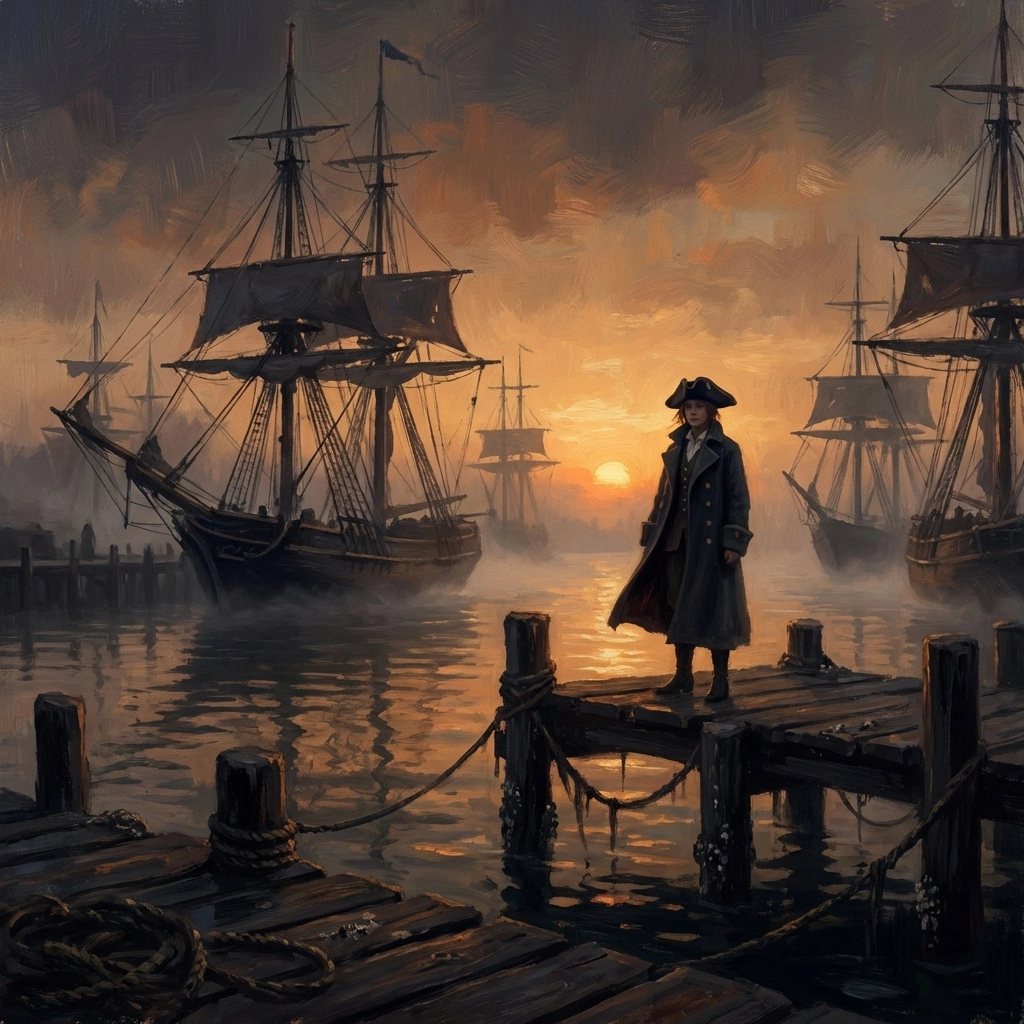
Binding her breasts with strips of sailcloth and cutting her hair short with her father’s razor, Sarah transformed herself into Silas Blackwood, a young man seeking his first berth aboard a whaling vessel. The Retribution was departing with the morning tide, its captain known for taking on inexperienced crew members willing to work for reduced shares.
Women in History: Hidden Behind Masculine Disguises
This whaling era story reflects the reality faced by countless women throughout maritime history: forced to adopt male identities to access opportunities, seek justice, or simply survive in a world that denied them agency.
Captain Jeremiah Morse was a weathered man with calculating eyes who looked Sarah up and down before nodding curtly. “Can you handle a harpoon, boy?”
“I can learn, sir,” Sarah replied, keeping her voice low and steady.
“Good enough. We sail at dawn. Don’t disappoint me, or you’ll find yourself swimming home.”
The first weeks aboard the Retribution were a brutal education in deception. Sarah learned to walk with broader steps, to spit over the rail like the other men, to curse with the fluency expected of a sailor. She kept her head down during the communal washing periods and volunteered for the loneliest watch shifts to avoid scrutiny.
But she also listened. In the crew’s quarters after dark, she heard stories that didn’t make it into official reports. The Redemption hadn’t been the first ship claimed by the White Leviathan. The Sarah’s Promise, the Magnificent Dawn, the Trinity’s Hope: all had met similar fates in the same stretch of ocean, all carrying valuable cargo bound for foreign markets.
Maritime Mystery: Unraveling the White Leviathan Legend
The deeper Sarah dug into the mystery, the more this maritime mystery revealed itself to be not about mythical creatures, but about very human greed and corruption within the shipping guild system.
First Mate Tommy Hendricks was a garrulous drunk who loved to impress the younger crew members with tales of his previous voyages. Sarah made sure to sit close during his storytelling sessions, nursing a mug of rum she barely touched while absorbing every detail.
“The Leviathan’s got a taste for ships carrying the finest spermaceti,” Hendricks slurred one night. “Always takes the ones loaded with the premium goods, leaves the common cargo ships alone. Smart beast, that one.”
Too smart, Sarah thought. Whales didn’t distinguish between cargo types.
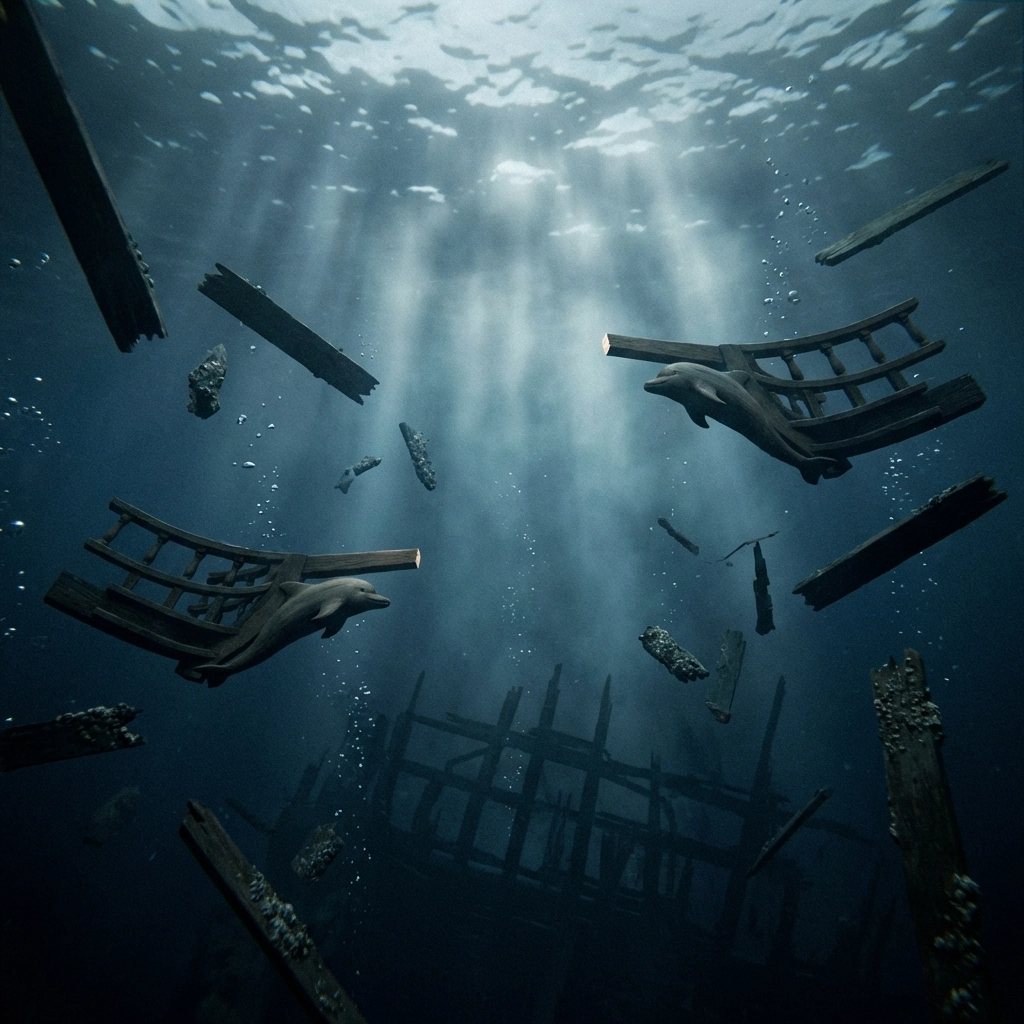
Her breakthrough came during a storm that drove the Retribution into the same waters where her father’s ship had allegedly been destroyed. While the rest of the crew battled to keep the ship intact, Sarah spotted debris floating in the choppy waters: pieces of a ship’s rail bearing the distinctive carved dolphins that had adorned the Redemption’s stern.
But these pieces showed no signs of whale damage. Instead, Sarah saw the unmistakable marks of axes and saws: the Redemption had been deliberately dismantled.
Moby Dick Reimagining: Truth Beneath the Myth
Unlike Melville’s obsessive captain pursuing a white whale, this Moby Dick reimagining presents a protagonist seeking truth rather than revenge, using intelligence and patience rather than destructive obsession.
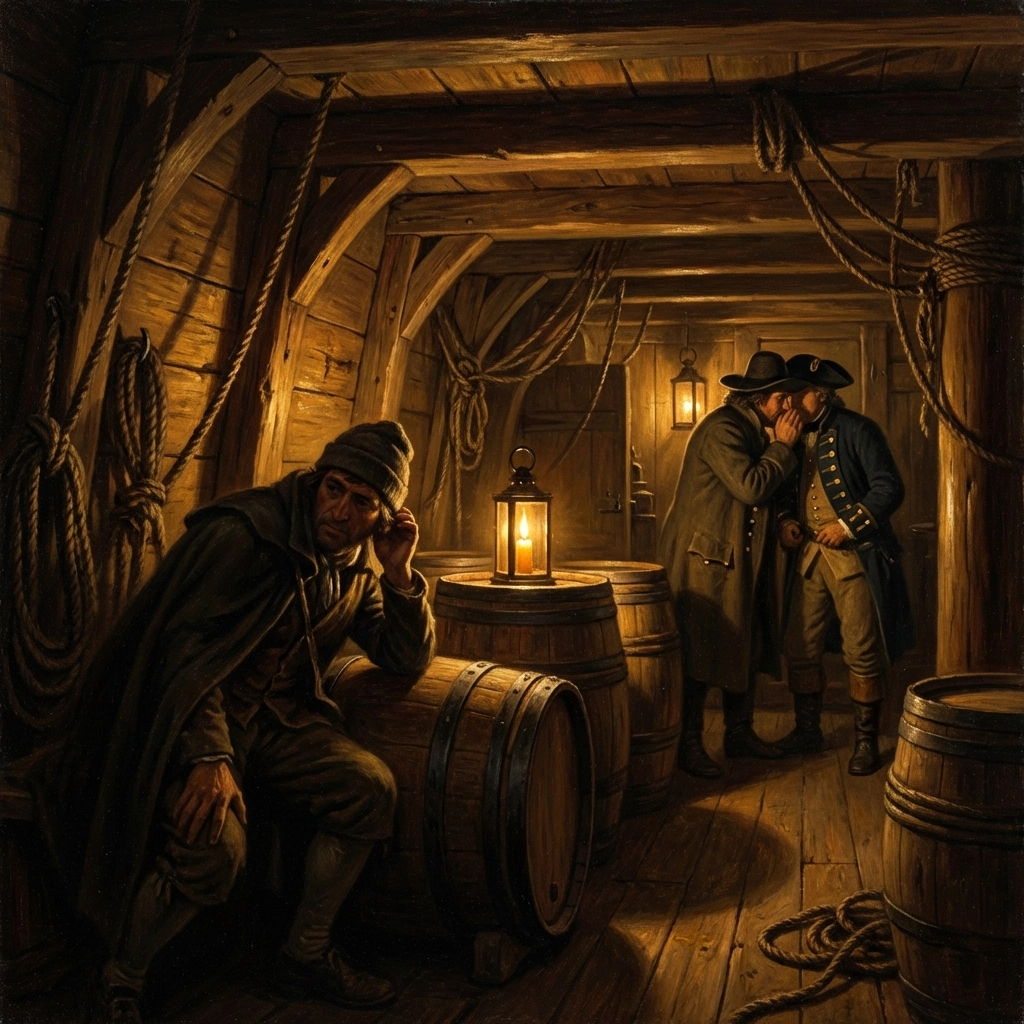
The revelation came when Sarah overheard a conversation between Captain Morse and a well-dressed stranger who had boarded during their last port stop. Hidden in the ship’s hold, she listened as they discussed the “White Leviathan protocol.”
“The Blackwood ship carried a fortune in processed oil and whalebone,” the stranger said. “The guild’s insurance representatives have already processed the claim. Your cut will be deposited in the usual account.”
“And the crew?” Morse asked.
“Sold to the sugar plantations in the Caribbean. They’ll work off their ‘debt’ for the ship’s destruction over the next twenty years. Quite profitable, actually.”
Sarah’s blood turned to ice. Her father and his men weren’t dead: they were enslaved, working in conditions that might be worse than death. The White Leviathan was a cover story for a systematic operation that captured valuable cargo ships, sold their crews into bondage, and collected insurance payouts on the supposedly destroyed vessels.
A Feminist Historical Retelling of Justice and Revelation
This feminist historical retelling demonstrates how women’s perspectives can illuminate injustices that male-dominated narratives often overlook or ignore, revealing the human cost of maritime greed.
Sarah’s hands shook as she realized the magnitude of the conspiracy. The shipping guild, the insurance companies, even some of the naval authorities: all complicit in a network that treated sailors as disposable cargo. Her father’s disappearance wasn’t an isolated tragedy but part of a systematic crime that had claimed dozens of ships and hundreds of men.
But Sarah Blackwood wasn’t just Edmund Blackwood’s daughter: she was her father’s student in navigation, strategy, and above all, justice. She began documenting everything she heard, sketching maps of the operation’s scope, and preparing for the moment when she could expose the truth.
The opportunity came when the Retribution docked in Port Royal. Sarah slipped away during shore leave and made her way to the British Colonial Office, where she revealed her true identity and presented her evidence to Commander William Hayes, a naval officer her father had mentioned as trustworthy.
“These are serious accusations, Miss Blackwood,” Hayes said after reviewing her documentation. “If you’re correct, we’re looking at crimes against the Crown’s shipping interests as well as enslavement of British subjects.”
“My father and his crew are still alive,” Sarah insisted. “Every day we delay condemns them to continued bondage.”
Hayes nodded grimly. “Then we’ll need to act quickly. But you understand, Miss Blackwood, that your testimony will expose your deception aboard the Retribution. Maritime law doesn’t look kindly on false identities.”
“I understand, Commander. But some things are more important than following unjust laws.”
Women in History: Courage Beyond Convention
The women in history who challenged societal expectations often faced impossible choices between personal safety and moral conviction, as Sarah’s story demonstrates.
The raid on the sugar plantation where the Redemption’s crew was held took place at dawn, three weeks after Sarah’s revelation. British marines, guided by intelligence gathered through her investigation, freed forty-seven sailors from various “destroyed” ships, including twelve survivors from her father’s crew.
Captain Edmund Blackwood was gaunt and scarred but alive, his eyes lighting with pride and amazement when he saw his daughter standing among the naval officers.
“Sarah?” he whispered. “How did you: “
“I learned from the best navigator I know,” she replied, embracing her father as tears streamed down both their faces.
The subsequent trials dismantled the White Leviathan conspiracy, resulting in multiple hangings and the reformation of maritime insurance practices. Captain Morse and his co-conspirators faced justice, while the shipping guild underwent an investigation that revealed corruption reaching into the highest levels of colonial commerce.
The Legacy Continues
Sarah Blackwood never returned to sea as Silas. Instead, she used her experience and evidence-gathering skills to establish the first maritime advocacy organization focused on protecting sailors’ rights and investigating suspicious ship disappearances. Her work led to reforms that protected countless lives and exposed numerous maritime crimes.
This feminist historical retelling reminds us that behind every myth of sea monsters and supernatural disasters, human truth often lurks, and sometimes it takes someone willing to challenge convention and risk everything to bring that truth to light.
The White Leviathan was real, but it wasn’t a whale. It was greed, corruption, and the willingness of powerful men to treat human lives as acceptable losses in their pursuit of profit. Sarah Blackwood proved that sometimes the most dangerous monsters are the ones that wear human faces and speak in civilized voices.
Her father’s legacy wasn’t lost to mythical beasts: it lived on through her courage to seek truth in the face of overwhelming odds, transforming her from victim to victor in a story that continues to inspire those who refuse to accept convenient lies when inconvenient truths demand justice.
