Dive into this Dark Academia Short Story about forbidden knowledge, impossible libraries, and the price of knowing what comes next.
The Hour Between Hours — Dark Academia
Eliot Vance had not slept properly in eleven days.
It started with the note slipped under her dormitory door: a single sentence written in faded ink on paper that smelled of mildew and something older. Something like forgotten rooms. Dark Academia.
The Blackwood Collection opens at 3:00 AM. Third floor, east corridor. Come alone.
She had dismissed it as a prank. Ashworth University attracted a certain type of student: the kind who read too much Borges and believed mystery was a personality trait. Dark Academia.
But the note kept reappearing. In her coat pocket. Between the pages of her thesis draft. Once, impossibly, inside a library book she had checked out that very afternoon.
So on the twelfth night, Eliot went looking.
A Door That Should Not Exist — Dark Academia
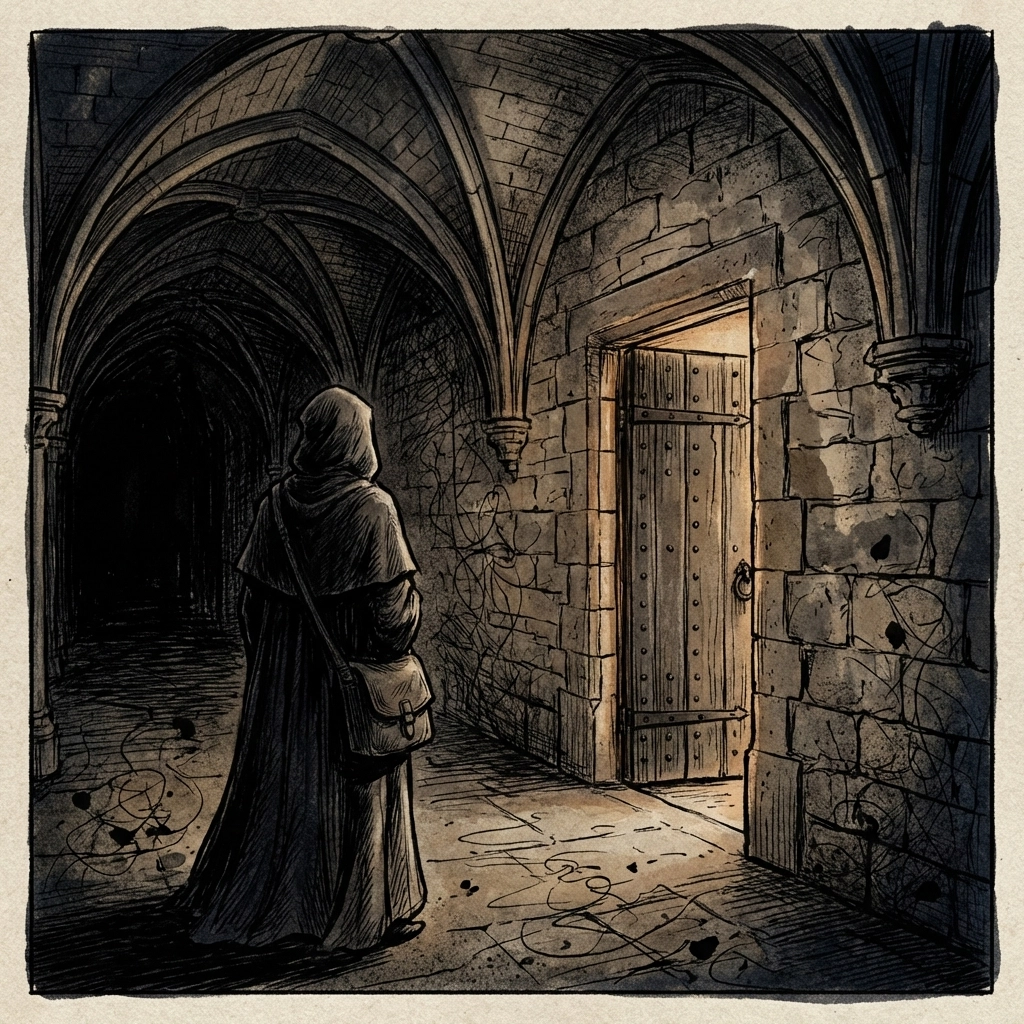
The east corridor of Ashworth’s main hall ended in a wall. Eliot had walked past it a hundred times during her three years as a graduate student. Stone and shadow. Nothing more. Dark Academia.
At 2:58 AM, she stood before that wall and waited.
The building groaned around her: old pipes, settling foundations, the ordinary complaints of a structure built in 1847. She checked her phone. 2:59.
Then 3:00.
The wall exhaled.
There was no other word for it. The stones seemed to breathe outward, and between one blink and the next, a door materialized where none had been. Dark wood, iron handle, a small brass plate that read simply: COLLECTION.
Eliot’s hand trembled as she pushed it open.
The Library Outside of Time — Dark Academia
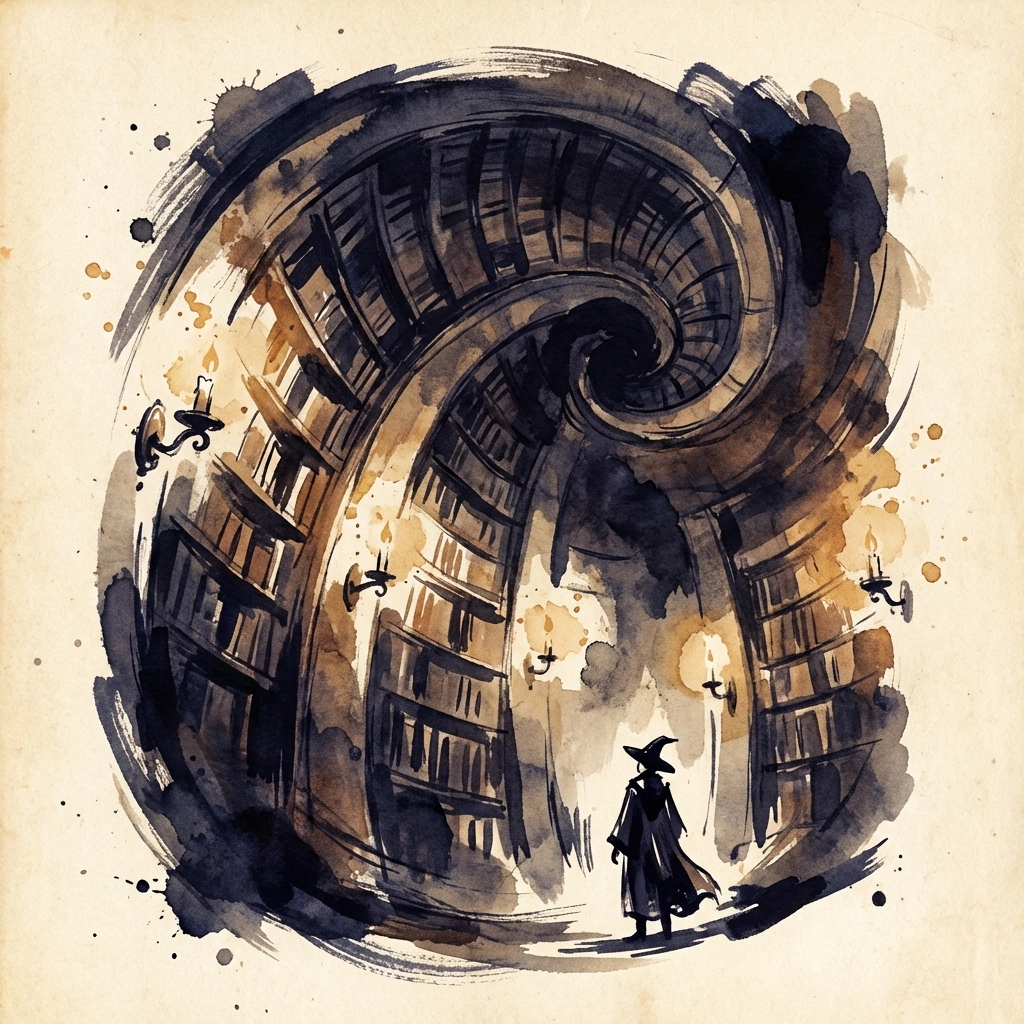
The room beyond defied the architecture of the building. It stretched impossibly wide, impossibly high, filled with shelves that curved and spiraled like the interior of some great nautilus shell. Candles burned in iron sconces, though no wax dripped. The air tasted of dust and ink and the particular silence found only in places where words go to rest.
This was Dark Academia made manifest: every romantic notion of hidden knowledge and secret scholarship condensed into physical space. Dark Academia.
“You’re early.”
Eliot spun toward the voice.
A figure stood between two towering shelves, dressed in clothes that belonged to no particular decade. A vest over a collarless shirt. Trousers that might have been cut in 1920 or 2020. Hair the color of faded parchment, and eyes that seemed to reflect candlelight even when facing away from the flames.
“The door appeared at exactly three,” Eliot said, her voice steadier than she felt.
“Time moves differently here.” The figure stepped closer. “I am the Curator. You received my invitation.”
“Your notes, you mean. The ones that kept appearing.”
“Invitations,” the Curator repeated, as if the distinction mattered. “This collection is selective. Not everyone receives one. Fewer still accept.”
Eliot looked around at the endless shelves. “What is this place?”
“A library.”
“Libraries don’t appear and disappear.”
“This one does.” The Curator’s expression remained neutral: not cold, but somehow distant, like someone observing the world from behind glass. “It exists in the hour between hours. 3:00 to 4:00 AM, when human consciousness is at its lowest ebb. When the boundaries between what is and what will be grow thin.”
Books Written in Futures — Dark Academia
“And the collection?” Eliot asked. “What’s in these books?”
The Curator smiled for the first time: a small, sad expression that did not reach those strange reflective eyes.
“Futures.” Dark Academia.
“Futures?”
“Every book in this library contains a single reader’s future. Written in their own hand, though they have not yet lived it. Not yet written it.” The Curator gestured toward the spiraling shelves. “Somewhere in this collection, Ms. Vance, there is a book with your name on the spine. Filled with pages you will one day fill.”
Eliot’s throat tightened. “That’s impossible.”
“Most things worth knowing are.”
She thought of her thesis: a study of temporal paradoxes in Victorian literature. The snake eating its own tail. Effect preceding cause. She had spent two years writing about impossible things while believing none of them could be real. Dark Academia.
“Why invite me here?”
“Because you’ve been looking,” the Curator said. “Not for this place specifically. But for something. An answer. A direction. Your research has stalled. Your advisor has grown impatient. You’ve begun to wonder if you chose the wrong path entirely.”
Every word landed like a stone dropped into still water. True. All of it true.
“The collection offers clarity,” the Curator continued. “One hour. One book. You may read your future: or leave without looking. The choice belongs to you alone.” Dark Academia.
The Weight of Knowing — Dark Academia
The Curator led her through corridors of shelves, past spines bearing names she did not recognize and some she did. A fellow student. A professor. The university’s dean.
“Do they all come here?” Eliot asked.
“Some. Not all accept what they find.”
“What happens if they don’t?”
“They forget. The library releases them, and by morning, this becomes nothing more than a strange dream. Fragmented. Fading. Dark Academia.”
“And if they do accept?”
The Curator stopped before a shelf at eye level. Drew out a single volume bound in deep blue cloth.
ELIOT VANCE was pressed into the spine in silver letters.
“Then they carry the weight of knowing.” Dark Academia.
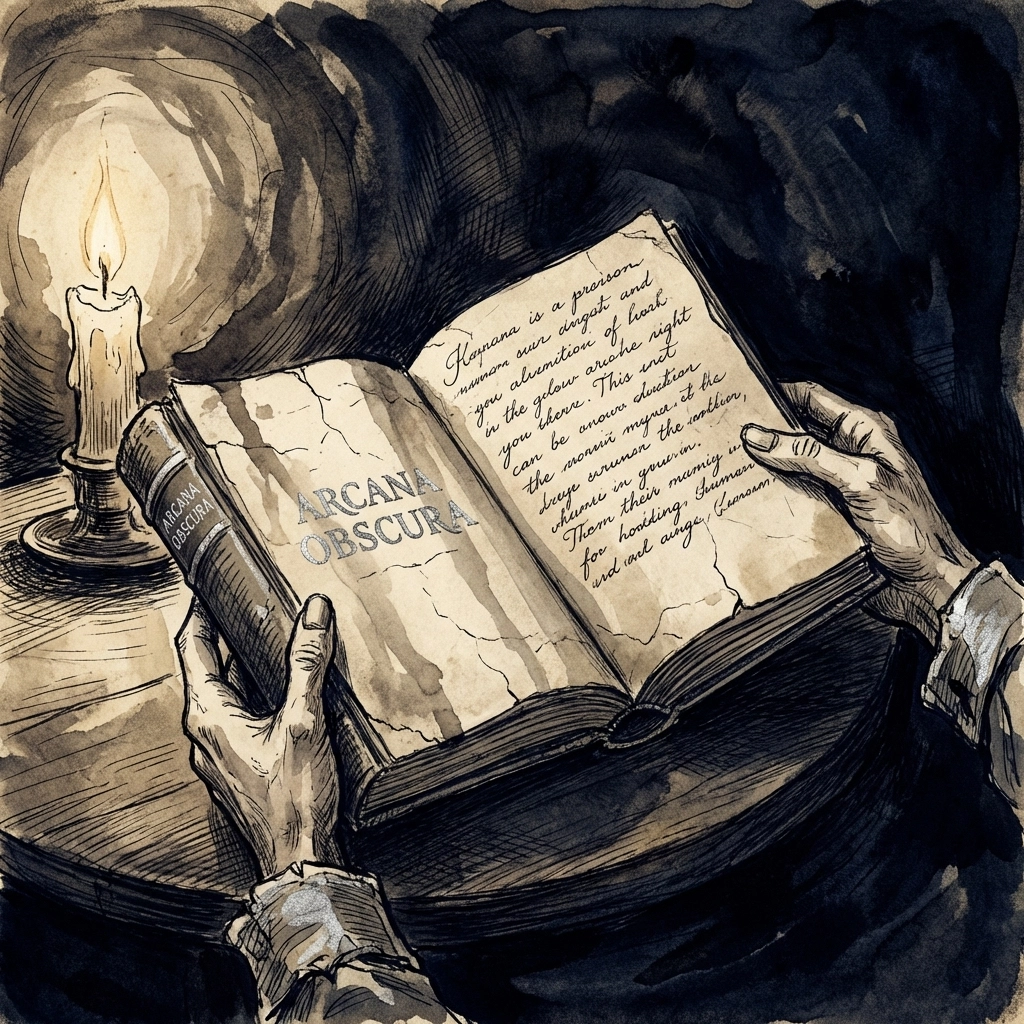
Eliot took the book. It was heavier than it looked: or perhaps that was her imagination, her fear, her desperate curiosity all compressed into the sensation of holding her own future in her hands.
She opened to the first page.
Her handwriting. Unmistakably hers, down to the way she crossed her T’s and the slight backward slant she had never been able to correct.
April 3rd. The letter arrived today. I did not expect to feel relieved.
She turned pages. Fragments emerged. A defense date. A train station. A name she did not recognize but would apparently come to know well. A funeral described in sparse, steady sentences. A book deal. A classroom of her own.
Loss and triumph, tangled together across years she had not yet lived.
The Final Page — Dark Academia
“How far does it go?” she asked without looking up.
“To the end.” Dark Academia.
Eliot’s hands stilled on the pages. She understood then what the Curator meant. The final page. The last entry. The moment where her handwriting would stop because there would be no more days left to record.
“Has anyone read that far?”
“Some.”
“What happened to them?”
“They left differently than they arrived.” The Curator’s voice held no judgment. “Knowing the shape of your ending changes the shape of your living. Some find peace. Others find paralysis. The library does not decide which. Only you can.” Dark Academia.
The candles flickered. Somewhere deep in the collection, a clock that should not exist began to chime.
“It is nearly four,” the Curator said.
Eliot looked at the book in her hands. All those pages. All those days. The answer to every question that had kept her awake for months.
She could know. Right now. Everything.
She closed the book.
The Choice — Dark Academia
“I don’t want to know the ending,” she said. “Only that there is one.”
The Curator took the volume back with something that might have been approval. “A rare choice.” Dark Academia.
“Will I remember this?”
“You will remember enough. The feeling. The certainty that your story continues, even if you cannot see its shape.” The Curator returned the book to its shelf. “That is often enough.” Dark Academia.
The chiming grew louder. The candles began to dim.
“The door will return you to the corridor,” the Curator said. “By morning, the wall will be only a wall again. But Ms. Vance: “
Eliot paused at the threshold.
“: finish your thesis. The answer you’re looking for is in the third chapter. You’ve been reading around it for months.”
Before she could respond, the library folded in on itself, and Eliot Vance found herself standing alone in a dark corridor, the taste of dust and ink still on her tongue, the weight of unread futures lifting from her shoulders.
She walked back to her dormitory as the first gray light crept across the campus. Dark Academia.
She did not sleep. She opened her thesis to chapter three.
And she began to write. Dark Academia.

Discover the literary roots of the Dark Academia aesthetic on JSTOR Daily